
From Dagestan to Bangkok: The Journey of Shamsudin Magomedov
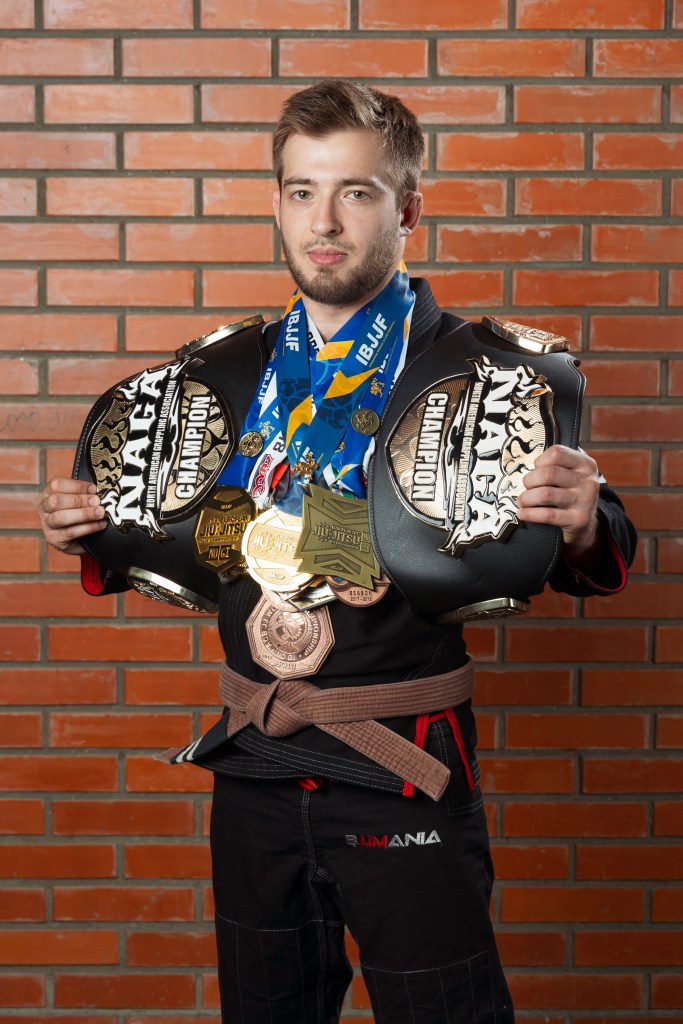
In Jiu-Jitsu, some athletes are shaped by competition, some by culture, and some by years of searching through different martial arts before finding the one that feels like home. For Shamsudin Magomedov, the path was never simple. Born in Dagestan, raised in Moscow, and now based in Thailand, his journey moved through karate, boxing, MMA, grappling, and eventually Brazilian Jiu-Jitsu.
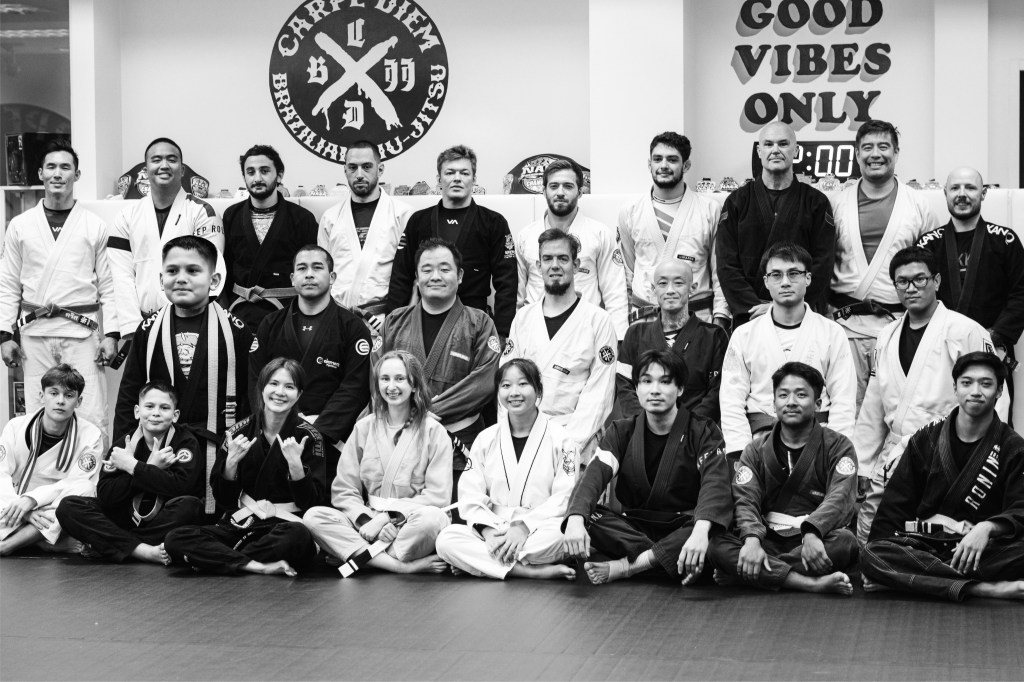
Today, Shamsudin is known not only for his achievements as a competitor, but also for his work as Head Coach and Director of Carpe Diem BJJ in Bangkok. His story reflects discipline, adaptation, and the constant pursuit of improvement.
Q1. Can you kindly introduce yourself?
My name is Shamsudin Magomedov. I was born in Makhachkala, Dagestan, but my family moved to Moscow when I was around two or three years old. Moscow is where I grew up, studied, earned my university degree, and began building my martial arts career.
After university, I started competing actively in Brazilian Jiu-Jitsu internationally. I became a six-time European Champion across organizations such as IBJJF, NAGA, and ACB. I also earned five more European Championship medals and became a two-time World Championship medalist under ACB in both Gi and No-Gi.
Coaching has also been a major part of my life. I hold degrees in Management and Sports Education, specializing in combat sports coaching. In Russia, I worked closely with children at a private martial arts academy, coaching more than 120 students. One of my proudest moments was helping my students place third in two youth divisions at the IBJJF European Championship. I have now lived in Thailand for four years, and for the last three years I have been Head Coach and Director of Carpe Diem BJJ in Bangkok. My goal is to keep growing as an athlete while helping others unlock their potential through Jiu-Jitsu.
Q2. How did you start training BJJ?
My path to Brazilian Jiu-Jitsu went through several martial arts. I began with karate as a child and trained for around nine years, earning a brown belt. Later, I wanted something more intense, so I moved into boxing, trained for about three years, and competed in 23 matches.
Around 2008, MMA was becoming popular in Russia, and I began looking for an MMA gym. The training there was split between striking and grappling, which became my first real introduction to wrestling and submission grappling.
I progressed quickly and won the Russian National Grappling Championship for juniors. After that, I spent a year in the army. When I returned, I decided to focus seriously on grappling. In 2012, I began training grappling full-time, and in 2015 I joined a Brazilian Jiu-Jitsu academy in Moscow. That was the real beginning of my BJJ career.
Looking back, each stage shaped me. Karate gave me coordination, boxing gave me timing, MMA introduced me to grappling, and Jiu-Jitsu became the place where everything came together.
Q3. What drew you to the gentle art?
It is hard to name one single reason. Grappling always felt natural to me. Maybe it was my personality, or maybe it was the way I moved and solved problems.
My childhood also played a role. Every summer, I spent time in Dagestan with my older cousins and relatives, and we wrestled constantly. I never imagined it would become my profession, but that was probably where my love for grappling began.
There was also a practical reason. After several years of boxing, I started having vision problems, and doctors advised me to stop competing in striking sports if I wanted to continue in martial arts. They recommended wrestling and grappling instead.
At one point, I considered MMA, but several fights fell through when opponents withdrew after learning about my grappling background. Eventually, I took that as a sign and committed fully to grappling and Jiu-Jitsu.
Longevity also mattered. Compared to striking, grappling usually creates less accumulated damage over time. My parents always told me to earn a living with my mind, not my fists. In the end, Jiu-Jitsu became the right decision.
Q4. What is the Jiu-Jitsu scene in Dagestan like?
I would not say I directly helped build the Jiu-Jitsu scene in Dagestan because I spent most of my life in Moscow. My perspective comes from competing against Dagestani athletes and coaching many students from the region.
Dagestani athletes are known for toughness, discipline, conditioning, and strong stand-up wrestling. Many come from freestyle wrestling or judo, so they already have a very strong foundation when they enter grappling or Jiu-Jitsu.
Today, grappling and Jiu-Jitsu are continuing to grow in Dagestan. Wrestling will probably remain the dominant combat sport, but Jiu-Jitsu has earned its place and is developing quickly.
Q5. You seem to have competed a lot. Is there a reason why, or is it ingrained in the culture?
I think it is both cultural and personal. In Russia, the competitive mindset is very strong. Sometimes even sparring feels like a world championship final because people are used to pushing hard in every situation.
For me, competition was also practical. Early in my career, I realized that results helped my coaching career. Every major win gave me more visibility and credibility, which helped attract students.
My system was simple: I coached, saved money, travelled to major tournaments, and tried to win. If I came back with a medal, people noticed. Media coverage helped spread my name, and more students came to train with me.
But it was not only business. I genuinely loved competing. I liked having a goal, preparing for tournaments, testing myself, recovering, and starting again. In my final year as a brown belt, I competed in fourteen tournaments and won three European Championships. That year taught me the value of staying active, focused, and constantly challenging myself.
Q6. What would it take to accelerate the growth of BJJ in Dagestan?
Honestly, I do not think Dagestan needs a special formula. The region already has talented athletes, strong coaches, intense competition, and deep respect for combat sports.
MMA is still very influential, and many athletes see grappling and Jiu-Jitsu as part of their path toward mixed martial arts. But more people are now starting to pursue grappling and BJJ as sports of their own.
As more wrestlers and judokas transition into submission grappling and Jiu-Jitsu, the level will continue to rise naturally. From my view, the growth is already happening in the right way.
Q7. Which ruleset do you favor the most in Submission Grappling and Jiu-Jitsu?
I do not think there is a perfect ruleset. Every organization has strengths and weaknesses.I like that IBJJF rewards many technical actions and gives athletes different ways to score. But sometimes the matches, especially ten-minute black belt matches, can become too long and strategic. For many years, leg locks were also limited, even though they are now an important part of modern grappling.
I also enjoy ADCC because the scoreless first half allows athletes to take risks and chase submissions. But ADCC can also become very tactical, especially in longer matches, where athletes may spend too much time fighting for small advantages.
For amateur tournaments, I prefer rulesets that reward activity, technical exchanges, and different scoring actions without making matches too long. For professional super fights, I like shorter rounds because they create urgency, encourage action, and are easier for spectators to follow.
Every ruleset tests something different. Some focus on technical development, some on realism, and some on entertainment. I enjoy them all because each one challenges a different part of an athlete’s game.
Q8. How do you find the training environment in Dagestan compared to other regions in Asia?
Dagestan is still one of the strongest places in the world for developing combat sports athletes. The biggest reason is the concentration of talent. You can walk into a room and find elite wrestlers, judokas, grapplers, and MMA fighters all training together.
Compared to most parts of Asia, Dagestan still has an advantage in depth and density of talent. There are more experienced competitors and high-level training partners available every day. That said, Asia is developing very quickly. More academies are opening, more events are being organized, and more athletes are competing internationally. Countries like Japan already have strong martial arts traditions, and other parts of Asia are growing fast as well.
I believe Asia will make a big leap forward in the coming years. But in terms of training culture, intensity, and the number of elite combat athletes in one place, Dagestan is still very unique.
Q9. What is the biggest achievement in your career so far?
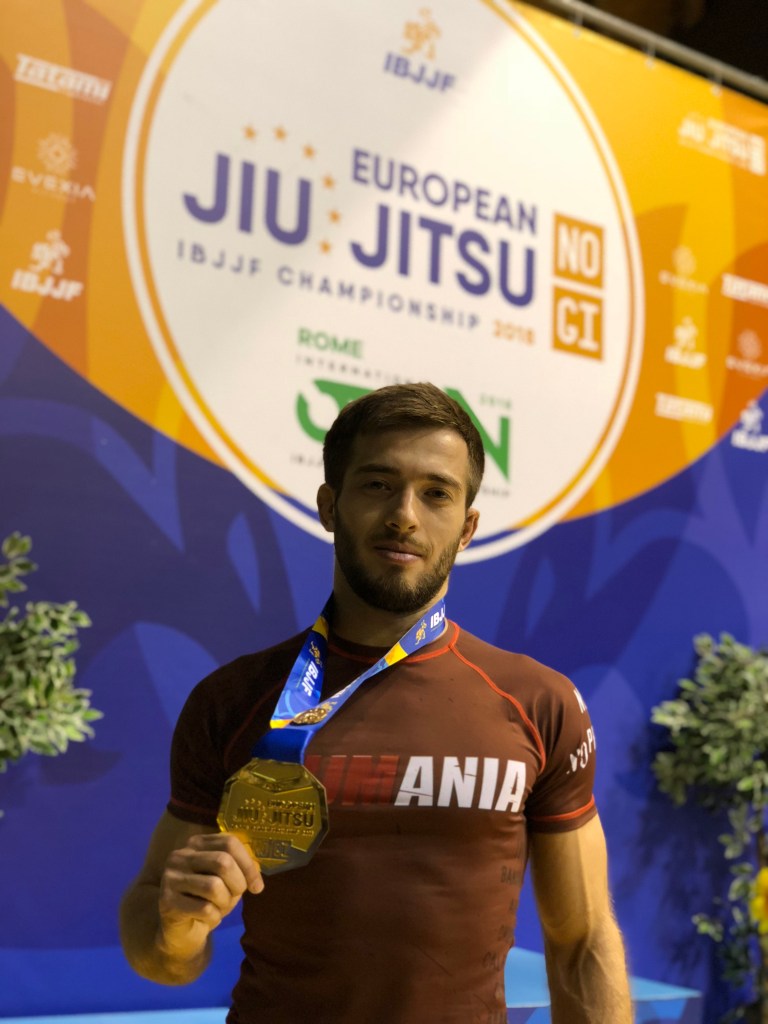
As an athlete, one of my most important achievements was winning the IBJJF European Championship as a brown belt. I received my black belt not long after, so it felt like the closing of one chapter and confirmation that I was ready for the next level.
The competition was very strong. In the final, I faced an athlete who was ranked No.1 in AJP NoGi and No.2 in Gi among brown belts worldwide at the time. I also finished every match before the final buzzer, which made the victory even more special.
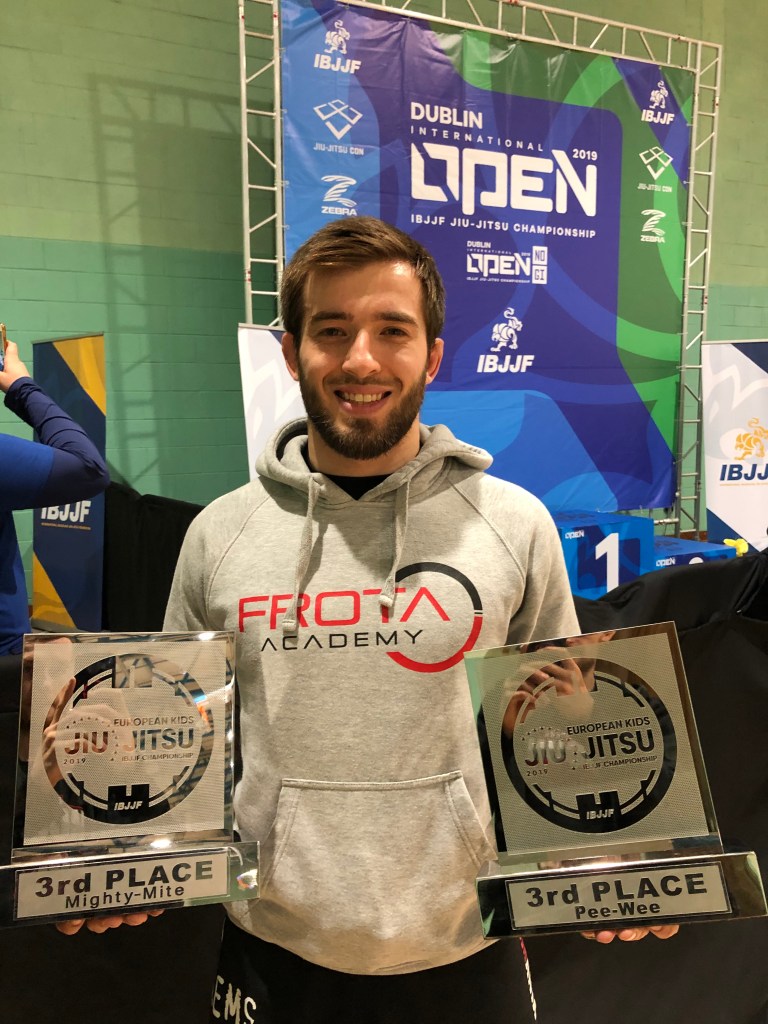
But as a coach, one achievement that means just as much was when my kids team competed at the IBJJF European Championship in Dublin and placed third overall in two youth divisions. We were a small team competing against some of the biggest academies in the world. That result showed me that good coaching, strong team culture, and a well-structured system can compete with much larger organizations.
As an athlete, you are responsible for yourself. As a coach, you are responsible for helping many
young people grow. Seeing them succeed means just as much to me as my own medals.
Q10. Do you prefer Gi or No-Gi?
I enjoy both, but for different reasons. For training, I prefer Gi because it offers more control, strategy, transitions, and problem-solving. With so many grips available, the game becomes more layered. For me, Gi training feels like chess on the mats.
For competition, I usually prefer No-Gi. It is faster, more explosive, and demands constant activity. Athletes cannot slow everything down with grips, so both competitors are forced to fight for initiative and attack.
Both formats are valuable. But for training, I prefer Gi because of its technical depth. For competition, I prefer No-Gi because of the pace, intensity, and pressure to attack.
Q11. How do you see the current trends in Jiu-Jitsu and the future of Jiu-Jitsu in Dagestan?
One trend I really enjoy is the growth of No-Gi Jiu-Jitsu. Many of the most talked-about professional matches today happen under No-Gi rules, and I think that is good for the sport. I remember when many people in the Russian Jiu-Jitsu community saw No-Gi as secondary.
There was a belief that “real” Jiu-Jitsu existed only in the Gi. But over the last decade, professional promotions and super fights have shown how exciting and spectator-friendly No-Gi can be.
That does not mean Gi is losing value. I believe both formats are important and will continue to exist together. But No-Gi clearly has strong momentum right now.
As for Dagestan, I am very optimistic. The region has always produced strong wrestlers and combat athletes. As more athletes move from wrestling and judo into grappling and BJJ, I believe more Dagestani competitors will make an impact internationally.
Q12. Which country is growing fastest in grappling right now?
That is difficult to answer because grappling changes very quickly. Every year, new teams emerge and new athletes break through.
If I had to name one country that still leads the way, it would be the United States. The U.S. has many elite athletes, professional promotions, coaching resources, and training opportunities. Many modern grappling trends come from there.
Outside the U.S., I am impressed by the United Kingdom.British grapplers have made huge progress and now compete consistently at the highest level. Poland also deserves recognition for producing strong competitors, and Australia is becoming more competitive internationally despite being far from many traditional grappling centers.
So I would highlight the United States, United Kingdom, Poland, and Australia. But what makes modern grappling exciting is how fast things change. A year from now, the answer could be different.
Q13. You seem to be really passionate, and I’ve heard you’re a phenomenal kids coach. Why
Honestly, I think that question is better answered by my students than by me. It always feels strange to evaluate yourself as a coach.
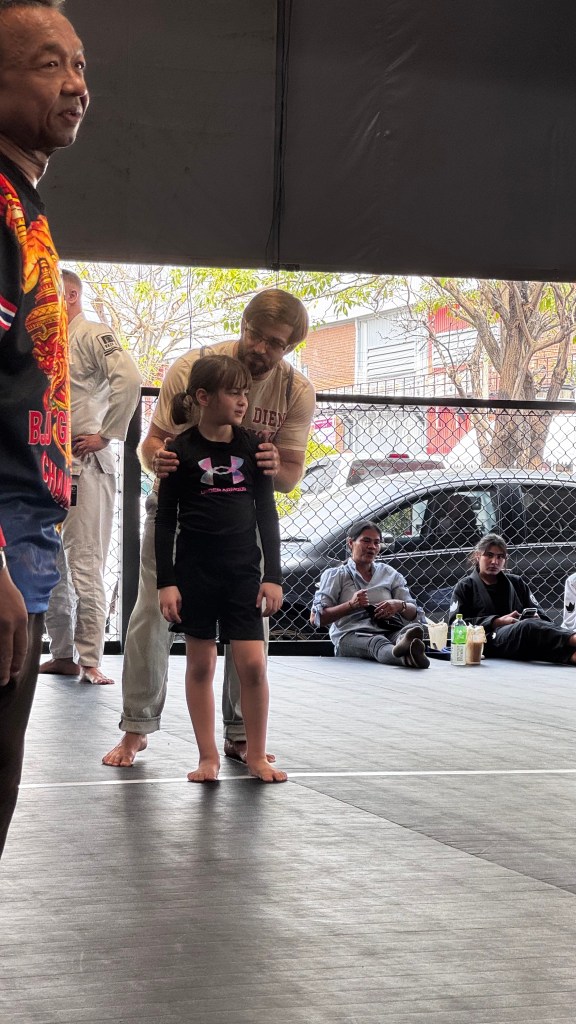
I simply try to do my job well and create an environment where people enjoy training, improving, and coming back to the academy. I never set out to become known as a great kids coach. My focus has always been to treat every student with respect, pay attention to details, and make training both effective and enjoyable.
If children are excited to come to class, if parents trust me with their kids, and if students continue training with me for years, then I suppose that is the best sign that I am doing something right.
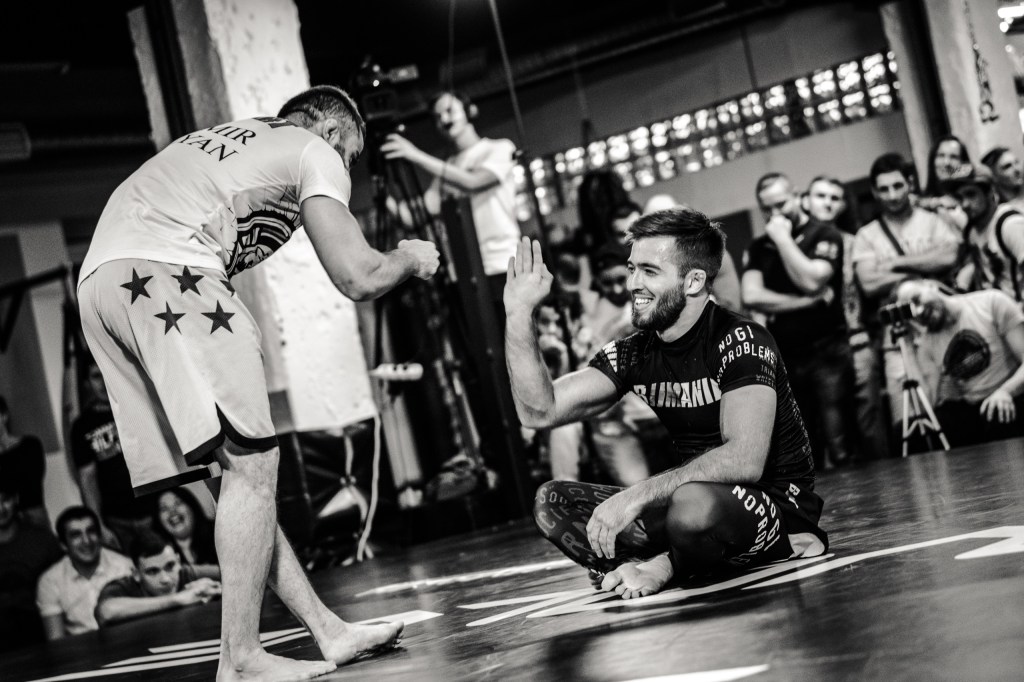
Q14. How do you approach your coaching? Is it candy or dodgeball smesh?
I do not think there is one universal answer. Especially with children, every student is different. Each child has a different personality, motivation, and way of learning, so what works for one may not work for another.
With adults, it is usually easier because they understand why they are doing a drill, even if they do not enjoy it. Children are different. If they lose interest or do not understand the purpose of an activity, they may simply refuse to participate.
That is why coaching is also psychological. You have to balance discipline and enjoyment. Sometimes you need to be demanding. Sometimes you need to make learning feel like a game. Sometimes you need to give a child time and space.
For me, it is not simply candy or dodgeball smesh. A good coach needs many tools and must know which tool fits which student. My goal is not only to teach Jiu-Jitsu, but to help people enjoy the process enough to keep learning for years.
Q15. Do you think this is the fastest way to develop students?
I do not believe there is one fastest method for everyone.Every student has different experiences, strengths, weaknesses, motivations, and learning speeds.
The fastest way to help students improve is to individualize the approach. If a coach can find the right key for each student, progress happens much faster. If a coach uses only one teaching style, only the students who naturally respond to that style will reach their full potential.
Individualization is not just about technique. It also includes communication, motivation, and how information is presented. One student may need only a quick demonstration. Another may need a detailed breakdown. Some respond well to humor and games, while others prefer structure and discipline.
In my opinion, the ability to adapt to the student is what separates a good coach from a great coach. The technique may be the same, but the path to mastering it is different for each person.
Q16. Who do you draw inspiration from as a coach and as a competitor?
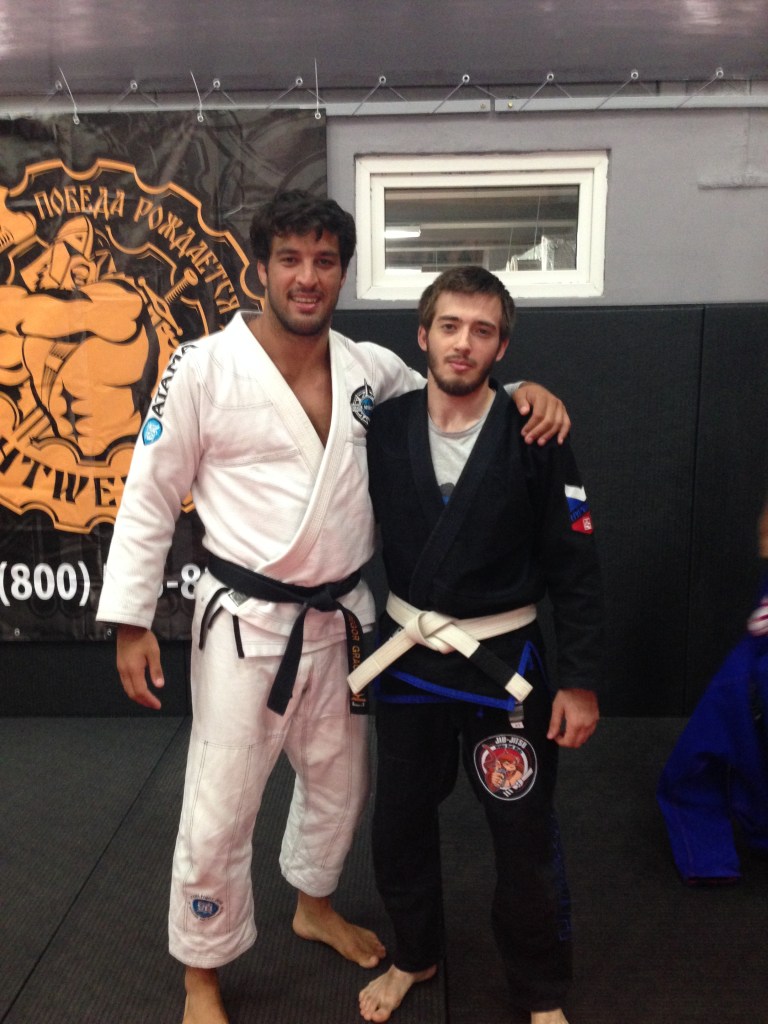
As a competitor, I was never inspired by only one person. Many athletes impressed me, but usually because of specific parts of their game — their guard, passing, defense, or submissions.
My goal was never to copy someone’s Jiu-Jitsu exactly. I wanted to understand why something worked, take the idea, and integrate it into my own system. I might study one athlete’s right-side attacks, another athlete’s left-side game, and someone else’s guard retention, then combine those ideas into my own style.
So I was not inspired by one individual as much as by the process of improvement itself and the question of how far I could push my understanding of Jiu-Jitsu.
As a coach, what inspires me most is seeing students change outside the academy. This is especially clear with children. You see them become more confident, make better decisions, handle challenges better, and grow into stronger versions of themselves.
Jiu-Jitsu teaches problem-solving under pressure. On the mats, you are constantly placed in difficult situations and forced to find solutions. When I see students carry that confidence and resilience into life, that inspires me more than trophies.
Q17. What are your future plans?
I have never focused too much on five- or ten-year plans. I prefer moving step by step and focusing on the next challenge in front of me.
Right now, my biggest goal is to continue building a strong Jiu-Jitsu team and to share as much of my knowledge as possible. One project I am excited about is a series of educational seminars on topics that are not always explored deeply in Jiu-Jitsu.
One of the first seminars will focus entirely on lapel guard. It is a position I have studied for years, and I believe it is still underused by many athletes. I do not want it to be a typical short seminar where a few techniques are shown. I want it to be a real deep dive into one system.
The seminar will cover concepts, structures, attacks, transitions, and strategies that make lapel guard powerful. My goal is not only to teach techniques, but to help students understand the system so they can solve problems independently.
Lapel guard is versatile because it can provide both defensive control and offensive opportunities. Some systems can also help lighter athletes control and attack heavier opponents, which is useful for open-weight divisions.
This seminar is not for complete beginners. Students should already understand basic open guard, De La Riva guard, Spider guard, and fundamental movements. It is designed for people who already have a base and want to take their guard game to the next level.
Beyond that, my plans are simple: continue building my team, continue learning, and continue sharing the knowledge that has helped me as both an athlete and a coach.
Q18. Lastly, who would you like to thank?
Honestly, I would not like to single out one person. Throughout my life and career, I have been lucky to meet many people who helped me at different stages — my parents, coaches, training partners, students, friends, and everyone I have met through this sport.
Every person I have trained with, competed against, worked alongside, or learned from has left an impact on my life.
Of course, I would also like to thank my students. Coaches learn just as much from students as students learn from coaches. A large part of who I am today, both as a coach and as a person, comes from the people I have had the privilege to teach.
Thank you to everyone for the support, the trust, and the opportunity to spend my life doing something I truly love.

