Longevity Over Ego: A Conversation with David Ooi on No-Gi, Coaching, and Building a Grappling Culture in Asia
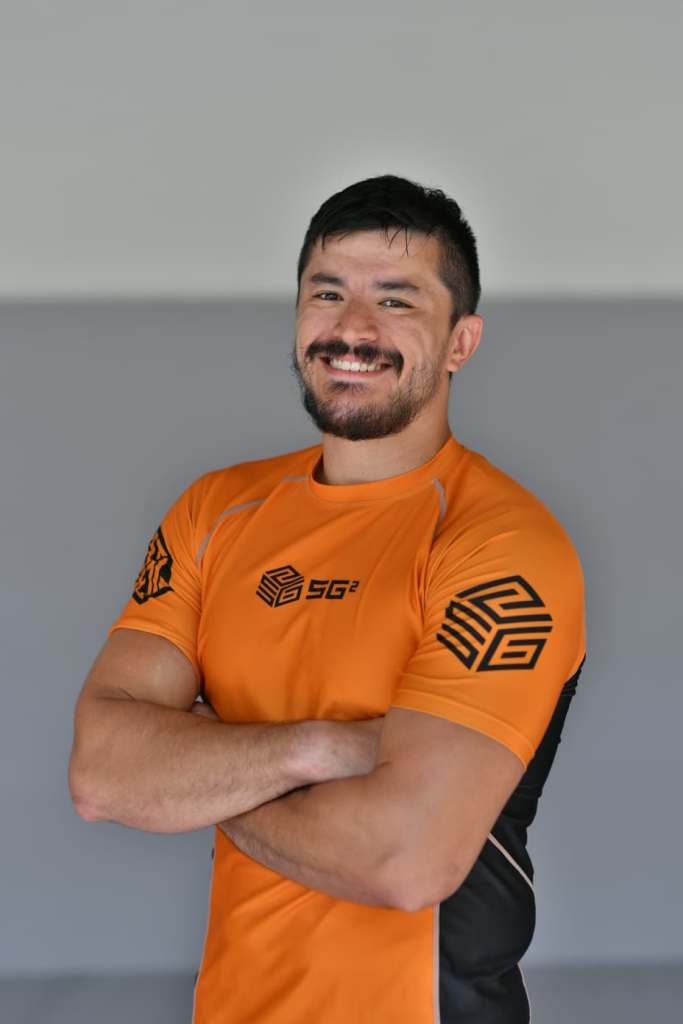
David Ooi is a black belt in both Judo and Brazilian Jiu-Jitsu, and the co-founder of Singapore Submission Grappling. Known for his thoughtful approach to training and coaching, David has been part of Singapore’s evolving grappling scene from its early stages. In this interview, he shares his journey from Judo to No-Gi, the philosophy behind his coaching style, his views on the sport’s development in Asia, and why building a strong grappling culture matters just as much as winning medals.
Q1. Can you kindly introduce yourself?
I’m David Ooi, a black belt in Judo and in Brazilian Jiujitsu. I’m also one of the owners of Singapore Submission Grappling.
Q2. You seem to have a degree in both mathematics and physiotherapy. Why do you have two seemingly unrelated degrees?
Maths was what I was good at in school – not so much at university though! After a couple of years trying to work in corporate world, I realised I wanted to do something which helped people to live a healthier life, so I studied physiotherapy to help fix injuries – opposite side of the jiujitsu coin of causing them.
Q3. How and why did you start training in BJJ? What drew you to the gentle art?
I did Judo as a child from age 8-13, and I stopped because I was just getting beaten up by lots of adults in adult classes back then. I thought I’d be a footballer instead (spoiler: I would not). Then at 16 I got jumped by a couple of guys at a party and decided I needed to learn how to fight better, so naturally I watched Rocky and started swinging at a heavy bag really badly. At 18 when I finished school my old judo coaches came in to teach a self defence workshop to everyone leaving, and I saw they had MMA classes, so I said I’d like to jump into that. Turned out to be a gi BJJ class, so I jumped in and haven’t really looked back since!
Q4. What brought you to Singapore?
My dad is Singaporean, so my parents.
Q5. Which Team or Association are you with, how did that connection come about?
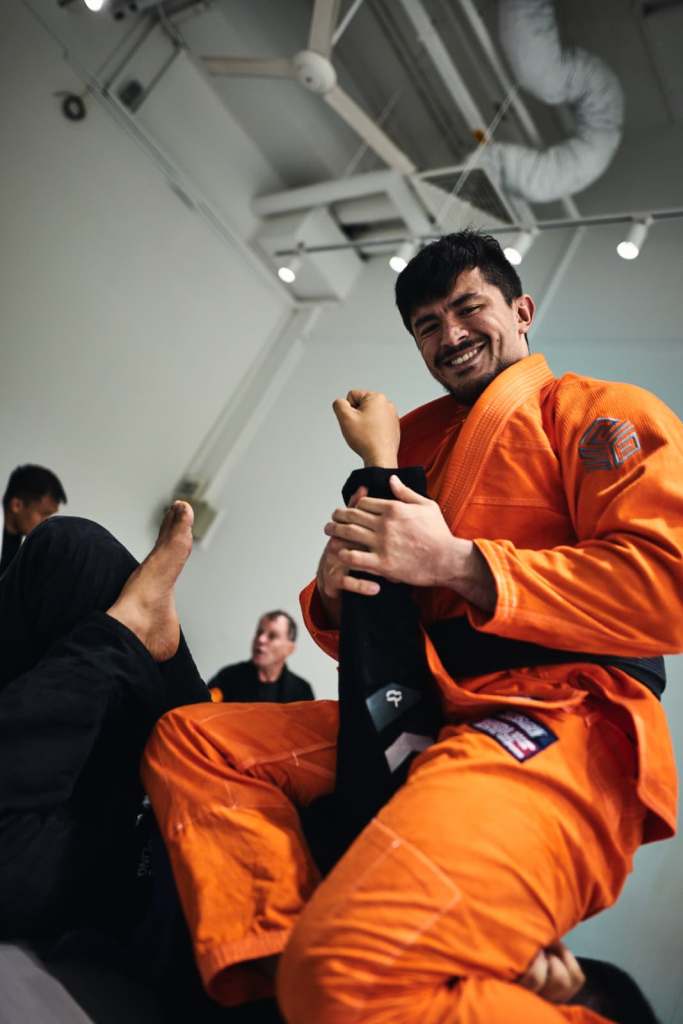
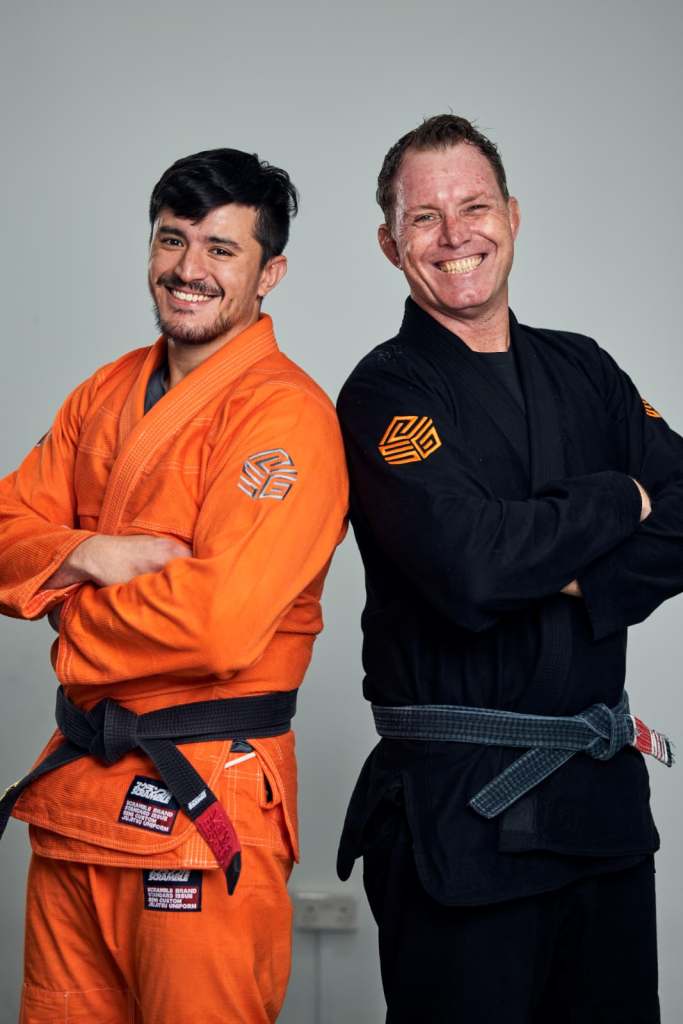
My lineage is through Rigan Machado -> Chris Haueter -> Chance Wanlass -> me. Chance moved to Singapore in 2012 and he’s given me all my belts from and including purple.
I was also graded in Daniel Strauss’ nogi system to green band when I lived in London and trained at Mill Hill BJJ.
Q6. When and how did you get your Black Belt? (September 2008 ~ March 2021)
My Judo black belt is through the British Judo Association and I received it in around 2013. To get that I attended a grading where I had to perform all the throws listed on the BJA syllabus. After that I got 2 matches against other brown belts, winning both by ippon qualified me for a line-up where I got to face off against 3 brown belts back to back to back. Winning all three matches by ippon gets you the necessary amount of points to get your 1st Dan. You can also do it by getting points in competition, but this way seemed cooler.
My BJJ black belt was given to me by Chance Wanlass in March 2021. I’d been coaching under his guidance at Move to Live for around 3 years at that point. It was also around pandemic times, so I’d been doing a fair amount of training in some smaller settings with some pretty good people, so I think he’d seen I’d been making some jumps up in my game.
Q7. What is the Jiu Jitsu scene in Singapore like?
Get me on the pod for this one lol. Long story short, I think it’s starting to develop it’s own identity a bit more recently as we get more homegrown coaches running their own programmes.
Q8. How did you come to co-found Singapore Submission Grappling and why?
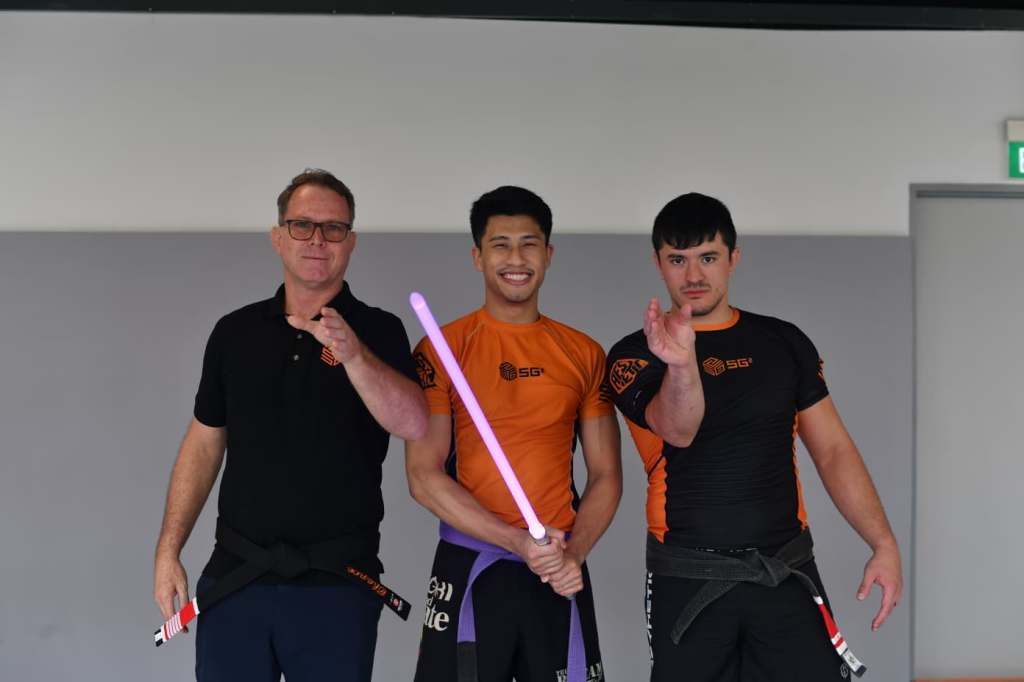
So Chance had been running a jiujitsu programme out of Move To Live – a yoga/HIIT studio since 2016 and I started helping him in 2018. We were running something like 5 classes a week, and it got to the point where in order to grow any further we would need to be running our own programme full time. We were very fortunate to find a venue in a great location and we went for it.
Q9. In terms of competing Submission Grappling and Jiu Jitsu, what rules set do you favor the most?
Obviously all the rulesets need some work as none of them are perfect. ADCC rules are pretty good, but I’d make a few changes – the out of bounds stuff isn’t really helping anyone. CJI is great, but needs to fix their judging criteria. I’ll go with a hipster answer and say the United World Wrestling rules are pretty fun – their overtime rules are dreadful though.
Q10. You have moved 100% to No-gi, coming from a Judo background can you explain why?
I remember quite well how I came to the conclusion that it made sense. I was training in London at Mill Hill BJJ, and I’d only managed to make it for gi classes. One day I was able to make it down for Dan Strauss’ nogi class – it was probably a bit more difficult as I wasn’t used to the lack of friction, but I had a really good time. The next day I woke up and felt this weird sensation which can best be described as “not having pain in all of my joints” which I was used to after gi training. So longevity is my first reason. Also – I live in South East Asia, it’s hot af, why would I wear a thick jacket and trousers? So temperature autoregulation is my second reason. Third reason is I’m an eco friendly eco bro and the reduction in laundry I’ve had to do will have significantly reduced my carbon footprint.
Q11. How do you find the training environment in Asia compared to other regions in the world?
I’ve recently only really trained in Singapore, HK and Phuket when it comes to Asia (or can we count Australia?), so my opinion isn’t the most well informed. I’ve heard very good things about the scene in Vietnam too. I think the median grappler in this part of the world matches up perfectly well against the median grappler anywhere else. At the top end though, I think there’s probably a bit of a gap in quality.
Q12. Correct me if I am wrong, but you seem to have come to a similar conclusion so a lot of coaches to go eco. Does this mindset coming from working with sports and injuries?
Indeed I have. It actually more than likely comes from my maths background though. I was exposed a little bit in my degree to dynamical systems and chaos theory, both of which are referenced in ecological dynamics. Essentially I see it that humans and sport are non linear chaotic systems and trying to apply linear solutions to solve non linear problems doesn’t work.
Q13. Tell us about your lifting regimen, you seem to like kettlebell training. Is there a reason why?
A lot of my lifting and strength and conditioning has been inspired by my time in London where I was fortunate to do a lot of lifting with Daniel Strauss. I do like kettlebells, and I also like lifting with sandbags as well as some calisthenics – but at the moment my lifting is very minimalist. I think these have quite good carryover to grappling compared to more traditional lifting and are relatively simple to do. A lot of this I think is to do with the fact that compared to a barbell, these things are harder to pick up, so when you train with them your connection gets stronger. Additionally powerlifting is quite a big sport in Singapore, so I have a fair few powerlifters come in – whether or not they (in my subjective opinion) feel strong grappling wise is a roll of a dice, I’ve also had some kettlebell athletes come in and all of them felt disgustingly strong.
Q14. How would you evaluate the current trends in Jiu Jitsu? What do you think of the future of Jiu Jitsu in the Singapore?
I think jiujitsu in general has a governing body problem, which has trickled down to Singapore in a bit of a specific way. All sports federations in Singapore need to answer to a governing body of some sort in order to get funding. The jiujitsu association here is aligned with an organisation focused on Olympic inclusion (don’t really know if that’s a good idea – but keep that can of worms closed for now), but this means that the athletes here are pushed towards testing themselves in competitions where they won’t get to match up with highest level athletes. The opportunity cost of this, is that they will then pass up opportunities to do events that would properly push them like ADCC trials/IBJJF majors and provide them real advancement in the sport.
Q15. Which country do you think is the fastest growing in terms of grappling in Asia right now?
Based on what I’ve seen in regional competitions Vietnam seem to be on an excellent upward trajectory with the people they are producing. If we class Australia as being in Asia (ADCC does so, so will I), then some of the talent coming out of there is pretty undeniable.
Q16. How do you approach your coaching? Tell me how you structure a class, the week and the month. How far ahead do you program your curriculum?
Most of my classes are 90 minutes long – the first hour will be focused on skill development using the constraints led approach. I aim for 6-7 rounds of 6 minutes in this time. I aim to have students experience situations in standing, guarded engagements and pinning engagements. The remaining half an hour is free sparring rounds. I aim to keep the focus of what I’m doing limited to under a month – usually 2-3 weeks, which is short by design to make sure students don’t lose interest in the things we are doing. The free sparring rounds will be what helps me decide on what the next block will focus on – I will watch and decide where the problems are at any given point. In my view planning super far ahead is trying to apply a linear solution to a nonlinear problem which as I’ve said doesn’t work.
Q17. Who do you draw inspiration from in terms of coaches and competitors?
Coaches: Chance Wanlass, Daniel Strauss, Greg Souders, Francesco Fonte, Cal Jones, Priit Mikhelson, Kabir Bath, Ed Ingamells, Dima.
Competitors: Jozef Chen, Nicky Rod, Gordon, Josh Saunders, Owen Livesey, Kenta Iwamoto, Rhys Allan.
Q18. What are your future plans?
I’m looking to grow the kids programme at Singapore Submission Grappling. I’ve also got some adults doing ADCC trials so hopefully my plans involve going to Poland next year.
Q19. Lastly, who would you like to thank?
All of the above in the inspiring category. I’d More importantly would be my wife, my family and my business partner Jedi who all put up with me pursuing this rather ridiculous hobby for a living.
 Grapple Asia